Mold Remediation San Antonio
Fast, IICRC-certified mold remediation in Bexar County. We arrive quickly to mitigate damage and restore your property.
Emergency Dispatch: (210) 940-2115Professional Mold Removal & Prevention
Mold is not just an eyesore — it is a serious health hazard that degrades indoor air quality, destroys building materials, and can make a home or business unsafe for occupancy. In the hot, humid Texas climate, mold colonies can begin establishing within 48 to 72 hours of any water intrusion event. If you smell a persistent musty odor, see discoloration on walls or ceilings, or recently experienced water damage, you need professional certified remediation — not a bottle of bleach and a sponge. San Antonio Flood Damage Restoration follows strict IICRC S520 standards to eliminate mold safely and permanently.
How Mold Grows — Spores, Humidity, and the Critical Window
Mold spores exist naturally in nearly every indoor and outdoor environment. Under dry conditions they are harmless and dormant. The trigger is moisture: once relative humidity climbs above 60% and an organic food source like drywall, wood framing, or insulation is wet, spores begin germinating. Within 48 to 72 hours, visible colonies can form. Left unchecked for weeks or months, a small leak behind a wall can produce a large hidden infestation affecting structural integrity and air quality throughout the entire building.
Health Risks of Mold Exposure
Mold releases microscopic spores and mycotoxins into the air that occupants breathe continuously. Exposure is linked to a range of health effects, which are more severe for children, the elderly, and anyone with asthma or a compromised immune system:
- Respiratory symptoms: Chronic coughing, wheezing, shortness of breath, and aggravated asthma attacks.
- Allergic reactions: Sneezing, runny nose, red or irritated eyes, and skin rashes.
- Neurological effects: Certain mycotoxins produced by black mold (Stachybotrys) are associated with headaches, fatigue, and cognitive difficulty.
Texas Climate and Elevated Mold Risk
San Antonio's summers combine temperatures regularly above 95°F with humidity levels that frequently push indoor relative humidity well above the 60% threshold — especially in homes with inadequate vapor barriers, aging HVAC systems, or crawl spaces. When a water event occurs in this climate, mold response time is far shorter than in drier regions. Our technicians understand local conditions and respond with urgency appropriate to the Texas environment.
Testing vs. Remediation — When to Call Us
Air quality testing by a third-party industrial hygienist is valuable in certain situations: post-remediation clearance testing, identifying hidden mold sources, or legal disputes. However, if you can see mold growth or smell a persistent musty odor, you do not need to wait for test results before calling us. Visible mold is a confirmed problem. We will begin remediation immediately and can recommend a certified industrial hygienist for post-clearance air sampling after the work is complete.
Our Mold Remediation Process — Step by Step
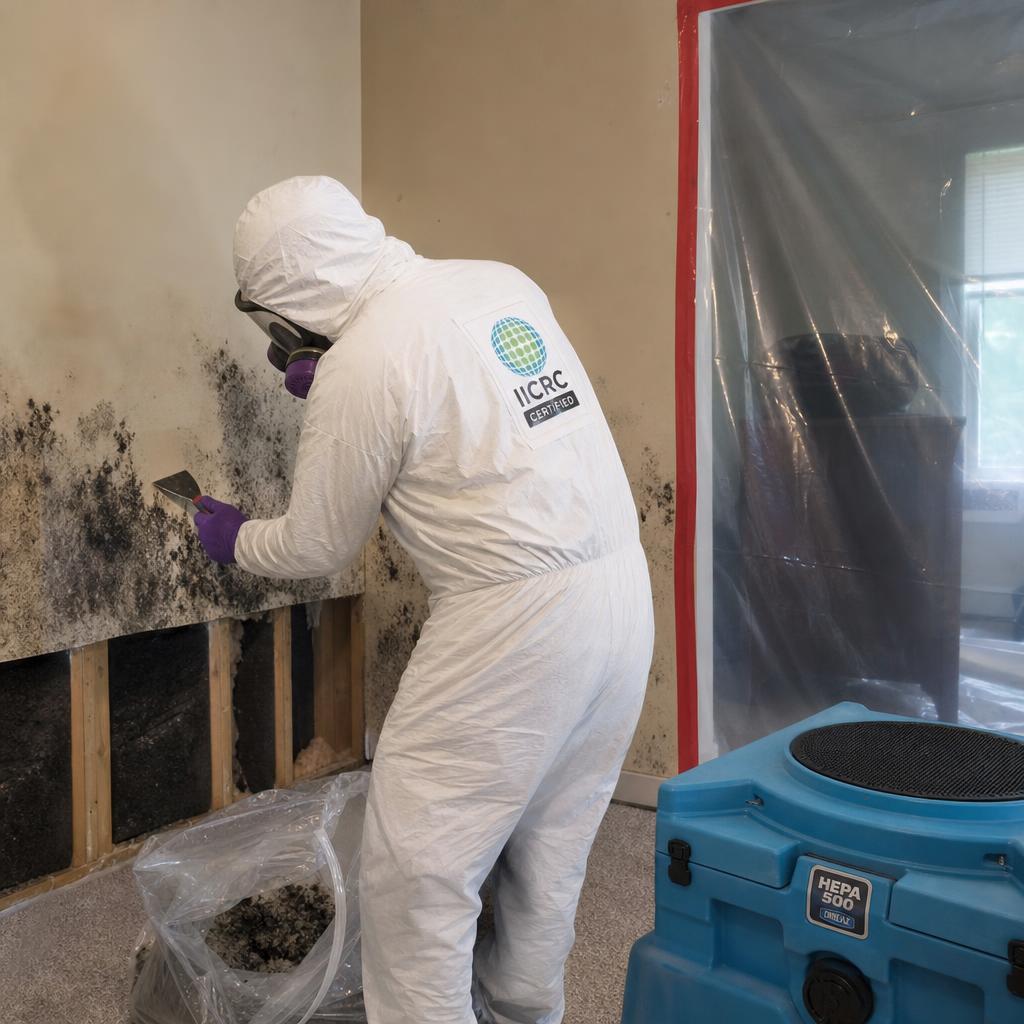
- Containment: We build physical barriers using 6-mil poly sheeting and seal all HVAC vents in the work area. Negative air pressure machines with HEPA filtration exhaust air outward, preventing spores from migrating to clean areas of the building during demolition.
- Removal: All mold-infested porous materials — drywall, insulation, baseboards, carpet — are carefully removed and double-bagged in sealed disposal bags before exiting the containment zone.
- Cleaning: Exposed structural framing is wire-brushed and sanded, then HEPA-vacuumed to remove surface spore contamination.
- Antimicrobial Treatment: We apply EPA-registered antimicrobial solutions specifically formulated for mold to kill remaining root structures (hyphae) embedded in the wood grain.
- Encapsulation: A mold-resistant encapsulant is applied to treated framing surfaces, sealing the wood and providing a barrier against future growth.
Preventing Regrowth After Remediation
Remediation without fixing the underlying moisture source guarantees a repeat infestation. Our team identifies and addresses the root cause — whether a slow plumbing leak, inadequate bathroom ventilation, foundation moisture intrusion, or a failing HVAC drain pan — before we close up the work area. We also advise homeowners on maintaining indoor humidity below 50% year-round using properly sized air conditioning and supplemental dehumidification where needed.
What to Do While Waiting for Our Team
If you suspect mold, avoid disturbing the affected area — walking through mold or attempting to clean it with bleach can release millions of spores into the air. Turn off your HVAC system if the affected area is in or near air ducts to prevent cross-contamination. Keep the space vacated, especially by children and anyone with respiratory conditions. Then call (210) 940-2115 — our IICRC certified mold remediation team serves all of Bexar County and will respond promptly to protect your family and your property.
Why Choose Us
- Safe Containment Procedures
- Negative Air Pressure Systems
- HEPA Air Filtration
- EPA-Registered Antimicrobials
- Root Cause Moisture Fixes
Need Help Now?
Our trucks are fully loaded and ready to dispatch to your location.
Call (210) 940-2115